

How the Private Jet Charter Process Works
You arrive at the FBO and your aircraft is already waiting on the ramp. The cabin is set exactly the way you prefer it.
Departure is on time. The flight is smooth. You land, a car is waiting, and the whole experience feels entirely effortless.
What you didn’t see was the previous 48 hours. That is, of course, the point.
Private aviation at its best is invisible. The logistics, contingencies, real-time decisions, and quiet coordination between operators, crews, ground handlers, and weather briefers never surface to the client. It isn’t supposed to.
But understanding that it exists, and what it actually involves, is worth knowing. Because effortless is not the same as easy.
The Work Begins Long Before Departure
From the moment a booking is confirmed, a sequence of operational preparation begins. Aircraft availability is verified against maintenance schedules and operational requirements within the general aviation network.
Crew duty time is reviewed and planned around departure windows, consistent with regulations established by the Federal Aviation Administration (FAA). Permits are pulled for international routes. FBO arrangements are made, including fuel, ground handling, customs coordination where applicable.
Catering orders are placed, confirmed, and sometimes re-confirmed. Passenger manifests are submitted to relevant authorities. Every element has a counterpart that has to align with it, and every timeline has a dependency.
This is the foundation. What happens on top of it is where experience becomes essential.
Backup Plans for the Backup Plan
In private aviation, professional brokers don’t plan for what could go wrong. They plan for what to do when the first backup plan also fails.
Contingency planning in aviation, particularly in general aviation and private charter operations, is layered by necessity. A flight might have a primary aircraft, an identified alternate aircraft in the same region, a third option at a slightly longer repositioning distance, all vetted and held in reserve before the client ever steps out the door.
Airport alternates are filed. Fuel reserves account for holds and diversions. Crew schedules are built with buffer, not margin.
The philosophy behind this approach is straightforward: any single point of failure should have a resolution already in motion before it becomes a problem. What distinguishes experienced charter brokers is not that they avoid complications. It is that their clients never encounter them.
Real-Time Weather and Routing Decisions
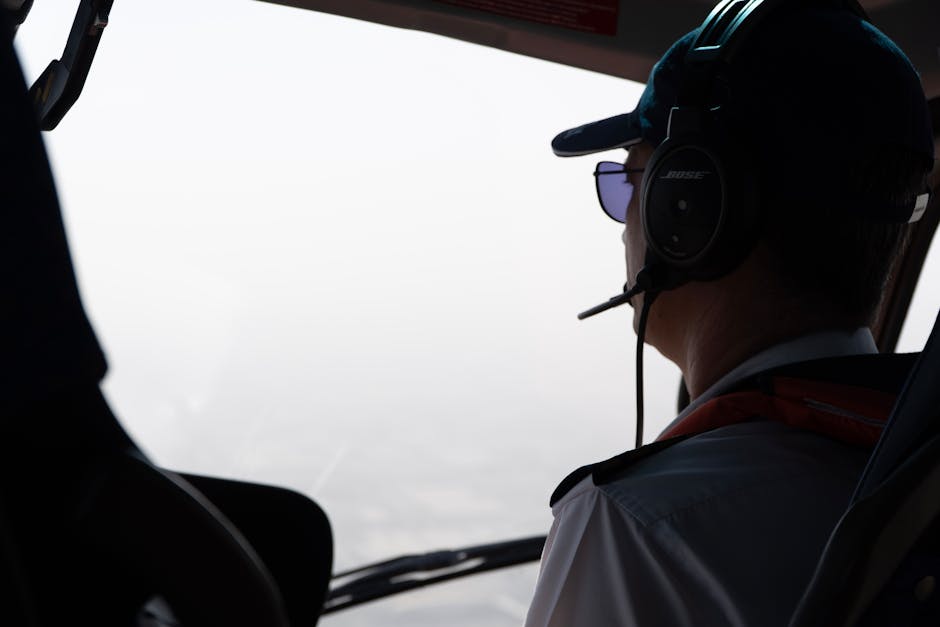
Flight routes are not fixed documents. They are living plans, revised continuously in response to conditions that change by the hour.
Weather systems, convective activity, turbulence reports, temporary flight restrictions (TFRs), and air traffic control flow programs all influence routing decisions from the moment a flight plan is filed until wheels-up, and sometimes beyond it. A departure that looked clean at the morning briefing may require a revised routing by early afternoon. A transcon flight might be re-routed mid-leg to avoid developing weather that was not forecast at departure.
These decisions are made by pilots and dispatchers working together, drawing on real-time data sources that the client never sees. SIGMET alerts are monitored. Winds-aloft data is reviewed for fuel efficiency and turbulence avoidance. International routes require awareness of airspace restrictions that can shift with political or operational changes abroad.
From a client’s perspective, the flight is comfortable. That comfort is frequently the result of a routing that was quietly changed twice before takeoff.
Last-Minute Aircraft Changes

There is perhaps nothing that tests a charter team more than an aircraft swap in the hours before departure. And there is perhaps nothing that better reveals the quality of that team than how invisibly it is handled.
Aircraft changes happen for legitimate reasons: a maintenance squawk that grounds the original aircraft, a repositioning conflict caused by weather delay elsewhere in the network, a decision to substitute a higher-performing aircraft on a demanding route. In a well-coordinated operation, the client experience does not change. The replacement aircraft is equivalent in cabin class. The FBO remains the same.
The departure time holds. The catering transfers. The client may receive a brief notification, or in many cases, simply boards.
The ability to execute an aircraft swap without disrupting the client experience is a function of relationships, resources, and preparation. It requires access to a broad network of vetted operators, the presence of qualified alternatives, and the operational judgment to identify them quickly. It is one of the clearest demonstrations of what separates a professional charter advisory from a transactional booking platform.
Operator and Crew Coordination
Behind every private flight is a web of coordination that most clients never consider. The aircraft itself is operated under a Part 135 air carrier certificate held by the operator, a separate entity from the charter advisor or broker who arranged the trip. The pilots flying that aircraft are managing their own duty time, rest requirements, and currency. The FBO at the destination has its own ground handling procedures.
Catering comes from a third party. Customs and immigration, on international flights, involve additional agencies entirely.
What the client experiences is a single, cohesive journey. What made it cohesive is a coordinated effort across multiple organizations, each of which had to be aligned before the flight began and remained in communication throughout it.
The broker’s role in this network is often underappreciated. They are the thread connecting all of it, communicating with the operator, confirming crew logistics, managing FBO relationships, handling the client’s evolving needs, and serving as the single point of accountability when any element requires adjustment.
24/7 Responsiveness
Private aviation does not operate on business hours, and professional charter teams don’t either.
A trip that departs at 7am was being monitored at midnight. An itinerary change requested at 10pm on a Sunday is handled that night, not the following morning. A passenger running 25 minutes late triggers an immediate coordination sequence: communicating with the crew, advising the FBO, and recalculating the new departure window and its downstream implications.
This always-on posture is not incidental. It is a defining characteristic of professional charter support. Travel at this level involves schedules that are complex, clients whose time is genuinely irreplaceable, and conditions that do not wait for convenient moments to change. The team monitoring a trip in real time is the reason a client can board without ever having experienced what almost happened.
What Seamless Actually Means

Seamless is not the absence of complexity. It is the management of complexity at a level the client never has to see.
Every effortless private aviation experience is the result of people doing significant work quietly: anticipating problems before they arrive, resolving them before they surface, and maintaining a standard of preparation that makes even genuinely difficult operational moments feel unremarkable from the client’s perspective.
That is what professional charter coordination looks like. And it is, by design, almost entirely invisible.
To learn more about how private aviation planning works, or to discuss an upcoming trip, we’re available to talk through the details.
