
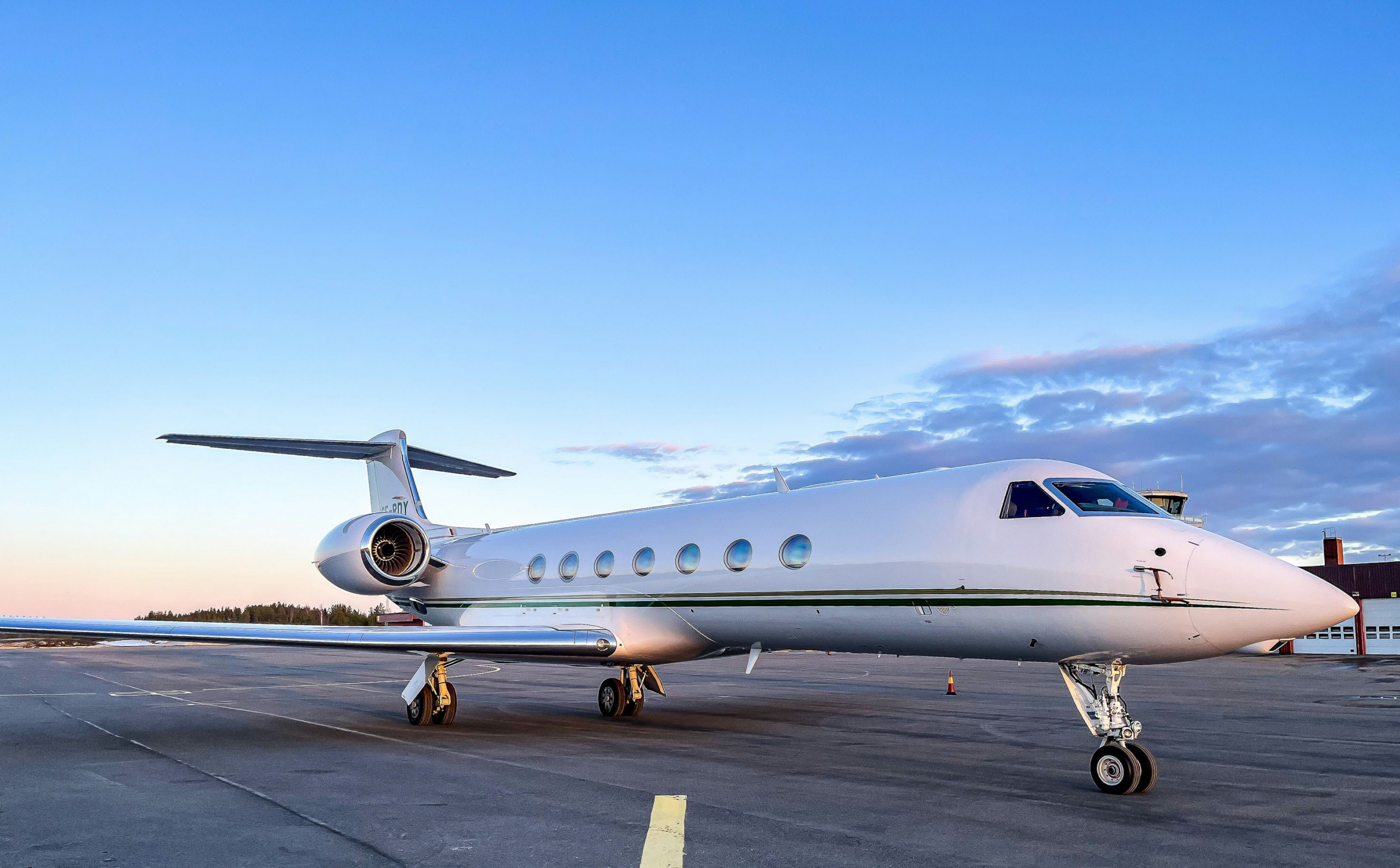
The experience of flying private is meaningfully different from commercial air travel. What that means in practice is worth understanding before your first flight.
What happens when you arrive at the airport? Can you bring your dog? What is the food situation? Is there WiFi? Can you smoke?
These are the questions clients ask before their first flight. If you’re still pricing this out, here’s what actually drives what a charter costs.
Arriving at the Airport
Business jets and private aircraft depart from Fixed Base Operators, known as FBOs. These are private terminals that operate separately from the commercial airline terminals at most airports. At smaller general aviation airports, the FBO is the entire facility.
The arrival experience at an FBO is one of the first things that surprises new clients. There are no long check-in lines, no TSA security queues, and no crowded gate areas. You drive directly to the terminal, park close to the entrance, and check in at a front desk. From there, you are escorted to the aircraft when the crew is ready.
Most FBOs ask passengers to arrive 15 to 30 minutes before departure. That is the window. Not two hours. Not 90 minutes. For business travelers managing a tight day, this alone increases the value of private aviation significantly.
FBO lounges vary in quality by location and operator, but most offer comfortable seating, complimentary beverages, and a quiet environment. Some of the larger FBOs at major aviation hubs are genuinely impressive facilities. The experience on the ramp and in the terminal is calm, efficient, and a world away from a commercial departure.
If you haven’t booked yet, our guide to chartering for the first time covers the full booking process.
Luggage
Private jets do not have the overhead bin problem commercial travel is built around. That said, luggage capacity does vary by aircraft size, and it is worth understanding before you pack.
Light jets have smaller baggage compartments and are best suited for soft-sided bags and carry-on-sized luggage. Midsize jets, large cabin jets, and heavy jets offer more generous storage, and in most cases there is no need to check anything or consolidate bags aggressively.
For trips involving significant gear — ski equipment, golf bags, large hard-sided cases — let your broker know in advance. Aircraft selection can be made with baggage capacity in mind, and it is a straightforward conversation to have before booking rather than a problem to solve on the ramp.
There are no weight restrictions in the traditional commercial sense, but total payload — passengers plus luggage plus fuel — is always a factor in aircraft performance. On shorter trips with smaller aircraft, a broker will flag this if it is relevant to your itinerary.
Catering

Catering on a private jet is arranged in advance through your broker and delivered to the aircraft before departure. It is not a service that appears mid-flight from a cart.
The options range from basic snack packages and beverages to full catered meals from local restaurants or private catering services. What is available depends on the departure airport, the flight duration, and how much lead time the operator has.
Major aviation hubs like Los Angeles, New York, and Miami tend to have the strongest catering options. Most domestic departures have solid catering options with 24 hours notice. International and early morning departures may require more planning.
Standard packages typically include a selection of snacks, non-alcoholic beverages, and water. Upgraded options can include full meals, charcuterie, sushi, or catering from specific restaurants — the level of service scales with what you request and what the market at your departure airport supports.
Alcohol is generally permitted and can be included in catering orders. Glassware and ice are standard on most aircraft. If you have dietary restrictions or specific preferences, communicate them to your broker when booking. The crew does not stock the aircraft, the caterer does, based on the order placed in advance.
Pets
Pets are permitted on private jets, and this is one of the genuine advantages of flying private for pet owners. There are no cargo holds, no airline-specific breed restrictions, and no separation from your animal during the flight.
Most operators allow pets in the cabin with their owners. Dogs and cats are the most common, and in most cases no crate is required — though having one available is good practice for the aircraft’s sake and your pet’s comfort during takeoff and landing.
Let your broker know you are traveling with a pet when booking. Some operators have specific policies, and a few aircraft have restrictions related to allergies or cleaning requirements. This is easy to navigate with advance notice.
Exotic animals, very large breeds, or multiple animals may require additional coordination. Again, the broker is the right person to work through this with before the trip is confirmed.
WiFi
WiFi availability on private jets has improved significantly over the past several years, but it is not universal. Whether a specific aircraft has in-flight connectivity depends on the operator and the aircraft’s installed equipment.
When you request a quote, WiFi availability is a detail worth asking about if it matters to your trip. Your broker can confirm which aircraft of the sourced options have connectivity and what the quality is likely to be. Satellite-based systems generally perform better on larger aircraft and longer routes.
Many clients use private aviation specifically to get uninterrupted work time in the air. On an aircraft with reliable WiFi, this works well. A cabin without WiFi is a genuinely distraction-free environment. For focused work, that has its own value. Confirm connectivity before booking if it matters to your trip.
Cell phone use is at the crew’s discretion during taxi, takeoff, and landing. While flying, normal use is generally fine. The crew will let you know if anything needs to be powered down.
Smoking
Smoking is not permitted on the vast majority of private charter flights. Most operators prohibit it entirely, regardless of aircraft size or trip length. This applies to cigarettes, cigars, and vapes.
There are a small number of operators and aircraft where smoking is permitted, typically on longer international trips under specific conditions. If this is a firm requirement, it is a conversation to have with your broker before booking — not an assumption to arrive with. Aircraft where smoking is allowed are a significant minority of the fleet, and sourcing one may affect your options on route, aircraft category, and cost.
The practical reason for the prohibition is straightforward: smoke and odor are extremely difficult to remove from a cabin interior, and operators are protective of their aircraft. The policy is firm across nearly every operator in the fleet.
The Crew
Private charter flights operate with a minimum of two pilots. Flight attendants are not standard on all aircraft — on smaller jets, the crew is typically the two pilots only. On larger heavy jets and for longer international flights, a dedicated flight attendant may be included or can often be arranged.
The crew is there to operate the flight safely and professionally. They are not concierge staff, but they are attentive and service-minded within the scope of their role. Treat them as the professionals they are. Who’s flying you, and how that operator was vetted, is the broker’s job before you ever board. Here’s how to evaluate a broker before you book.
Both pilots hold Airline Transport Pilot certificates and operate under strict FAA duty time and rest requirements. The safety standards that govern Part 135 charter operations are rigorous. For clients who want to understand the regulatory framework in more detail, the FAA’s Part 135 guidelines are publicly available.
Ground Transportation and Departure Logistics
Your broker can coordinate ground transportation on both ends of the trip — car service to the FBO on departure and transportation from the arrival FBO to your destination. This is worth arranging in advance rather than managing on arrival, particularly at unfamiliar airports.
Customs and immigration for international flights are handled at the arrival FBO rather than a commercial terminal. The process is generally faster and more straightforward than commercial entry, but the same documentation requirements apply. Make sure passports and any required visas are current before the trip.
For domestic flights, there is no equivalent customs process. You land, deplane, and move on. The FBO may have your arranged car waiting on the ramp.
What the Flight Itself Feels Like
Private jets cruise at altitudes between 41,000 and 51,000 feet on many routes, above most commercial traffic and weather. The ride is typically smooth. Turbulence encounters are less frequent at these altitudes, though not impossible.
Cabin noise levels vary by aircraft. Older light jets can be noticeably louder than newer, large-cabin aircraft. If a quiet cabin is a priority for working or sleeping, it is worth factoring aircraft age and model into the selection conversation with your broker.
The cabin environment on a private jet is less pressurized than commercial aircraft in the sense that the pressure differential is managed differently, but modern private jets are designed for passenger comfort and most clients do not notice a meaningful difference on domestic routes. Ultra long range jets in particular are engineered for passenger comfort on extended international routes, with lower effective cabin altitudes that reduce fatigue on transcontinental trips.
Seat configuration, cabin layout, and available workspace all vary by aircraft. Your broker can share interior photos and specs for any aircraft being sourced. If you are working, sleeping, or hosting a client meeting in the air, it is worth reviewing the layout before confirming.
The Short Version
The logistics are straightforward. Let your broker know upfront if you are travelling with a pet or need WiFi, have your catering in order by the day before, and lastly, arrive 15 to 30 minutes before departure. Those are the conversations worth having before you fly. The rest takes care of itself.
The experience from curb to wheels-up is faster and quieter than commercial travel. Most clients find that after one flight, the whole process feels obvious.
If you are still working through the booking side of things, our guide on how to charter a private jet for the first time is a good place to start.
